Sunday, August 29, 2010


This year is also the 400th anniversary of the Varietie of Lute Lessons which was compiled by Robert Dowland too. The book is a collection of, though you wouldn't think it from the word 'lessons', sometimes very difficult solo pieces by English, French, German and Italian composers. It starts off with a translation of Besard's lute method Necessarie Observations Belonging to the Lute and Lute Playing. Besard tells you to use what was to become the 'Baroque' lute technique with the thumb outside the fingers. Make a fist with your right hand as if you were hitch-hiking, then put your pinky on the soundboard of the lute and that is the new technique. The old one is to hold your pinky and thumb as if you were holding a pen so that when you alternate plucking thumb and forefinger the thumb goes into the palm of your hand. Here's the old Renaissance hand position, painted by Jan van Scorel in the early 16th century:

And here's the new hand position, with the lute player Charles Mouton painted by François de Troy in 1690:

Besard, as I say, recommends the new hand position, 'execpt thy thombe be short.' Well, mine is very short, and I think the old technique works better for the older pieces in the book. The piece you can listen to above or download here, for instance, is by Alfonso Ferrabosco the Elder, who died in 1588. I think that the older technique favours the polyphonic nature of most of the works in the book, but that the corantos (actually new French style courantes) in the end of the book are better with the thumb outside. The older technique makes it easier to bring out the polyphony and the new technique brings out the treble and bass, which is more polarised and uses 'style brisé' decoration, rather than 'divisions'.

So what technique do you use for the music of John Dowland, who contributes to the book tips for how to buy strings and how to tie your frets on in the right place? (The placements come out as just about equal temperament.) There are more pieces by John Dowland than any other composer in the book. I usually play them with my thumb inside in the old manner, but he lived in a period of transition. Saying 'this is a recording of John Dowland's complete lute works with original instruments and authentic playing techniques' is impossible. In addition to the changing technique and his lute going from having six to nine or ten pairs of strings in his lifetime, there are usually several versions of his pieces.

The type of dance you hear above, the pavan, is a slow dance which is almost like a processional onto the dance floor. There are usually three sections, or 'strains' they would say, each of which are repeated. You can hear Ferrabosco's written out decorations, they would say 'divisions' in the repeats of the strains. Alfonso Ferrabosco the Elder is the composer of the piece that the crazy lord can't get out of his head in Rose Tremain's book Music and Silence which was very popular a few years ago.

Thursday, August 19, 2010


Here is another piece from A Musicall Banquet of 1610. As I say in the last post, the book has a couple of solo 'madrigals' as he termed them by Giulio Caccini. Caccini worked for the Grand Duke of Tuscany, Ferdinand I de' Medici.

Though his publication of 1602, Le Nuove Musiche, is taken as a watershed between Renaissance and Baroque music, the ideas that shaped its contents were very much of the Renaissance. Caccini, with his colleagues at the Florentine court, Jacopo Peri, Vincenzo Galilei and others, were creating the 'new music' in imitation of the Ancient Greeks, who they knew declaimed poetry in the rhythm and pitches in imitation of spoken text; sort of a heightened poetry reading. Since they Greeks used the lyre and kithara to accompany themselves, they developed the new instrument the 'chitarrone' (big kithara?) which Caccini specifies as the best accompaniment for the voice in his long preface to Nuove Musiche. (The name chitarrone dropped away after a few of decades and theorbo became the most widely used term for the instrument.) Other instruments could be and were used though, because Caccini has the music printed with the singing line, and a bass line, with figures from which the lute player, or the chitarrone player would make up chordal accompaniment.

Robert Dowland (or Diana Poulton thinks it may have been his dad) makes up the accompaniment for the purchaser of Musicall Banquet; I guess the skill of figured bass playing wasn't widespread in England yet. His accompaniment, which I am using in this mp3 recording (which you can download for free here), is in lute tablature which tells you exactly what notes to play and where to put your fingers. It's busier than you would make up from a bass line, especially if you were playing the cumbersome and loud and sustaining chitarrone/theorbo. Caccini might have criticised it for getting in the way of his freedom to declaim the text, because for him, it's all about the singer and the text and, indeed there are a few other manuscript sources of tablature accompaniments from Italy that are less busy.

Here's a translation. You can hear that Caccini has carefully considered how an over-emotional man might berate his lover and represented it in pitch and rhythm. The words are by Giovanni Battista Guarini.

Amarilli, my love,
Don’t you believe you are my love, heart's desire.
Believe it and if doubt assails you,
Take my arrow open my breast,
and you will find written on my heart:
Amarilli is my love.


Thursday, August 12, 2010


This year is the 400th anniversary of the printing of A Musicall Banquet. It's a collection of songs compiled by Robert Dowland, son of John. Inside the collection are 3 songs by John (Farre from triumphing court, with words by the formentioned Sir Henry Lee, Lady if you so Spight me, and In darknesse let me dwell), a bunch of songs by guys who were otherwise not known to be songwriters (Anthony Holborne, Daniel Batchelar and Robert Hales, who was Elizabeth's favorite singer and sang the formentioned His golden locks at its premier). It's also got a number of French airs de cour, some Spanish songs and some Italian, including Caccini's Amarilli and Dovro dunque with written out lute accompaniments instead of just figured bass.

The poets are given credit as well in a lot of cases. There are some by Elizabeth's lover, the Earl of Essex, and some of the 'Songs' (as opposed to sonnets) from Philip Sidney's Astrophel and Stella. One of these Sidney songs, In a Grove, was written to a pre-existing tune by Guillaume Tessier. Tessier's air originally set a poem by Ronsard, so Sidney is imitating French poetic meter just by using the tune as a model. (I've linked the poems so you can compare if you are skilled in the French tongue.) Sidney did this in other places in his Certain Sonnets collection.

Monday, August 2, 2010

Here's what Chris Verrette and I played on Sunday at St. James Cathedral.

Chris played with the violin in the short ribs (well, maybe not quite that low, but Matteis was said to play with it down there quite late in the 17th century).

Thomas Baltzar, Prelude
Biagio Marini, Sonata variata

Anon., Prelude
Marini, Romanesca

Anon., Prelude
Orlando di Lasso/Verrette, Divisions on Suzanne ung jour

Anon., Passacaglia from Sonate "Wie schon leuchtet der Morgenstern"


Tuesday, July 27, 2010

Today we did an emergency concert at St. James Cathedral's Music at Midday series, since one of the performers who were booked had to go and look after a sick mom. The concert went pretty well, especially considering we only knew we were doing it 15 hours earlier. The music we performed is below.

I explained how 'His golden locks' was for the retirement celebration for Sir Henry Lee, Queen Elizabeth I's champion at the Accession Day tilt games.

There is not a picture of us playing so here is a picture of me putting a new fret on my 7-course lute this morning. You tie the fret gut on a little down the neck, then burn the ends of the knot so they bunch up and get tighter, then slip the fret up to where it needs to go. As the neck widens towards the body the fret gets tighter, so that, theoretically, it doesn't slip around and go out of tune. I can do the upper frets OK, but have still not got the hang of tying the first fret (which doesn't have as far to slip up the neck) very tight. I think that luthier Michael Schreiner uses pliers, and though I am, as you see, willing to put an open flame next to my lute, I am strangely uneasy about wielding metal tools around it. Curious.

The matches, by the way, are from the house owned by American industrialist J.P. Morgan, which is where the memorial service in the last entry was held.

Here's what we sang at the cathedral:

Unquiet thoghts - John Dowland (1563-1626)
I saw my Lady weepe - Dowland
Come again - Dowland
So, so, leave off - Alfonso Ferrabosco the Younger (c.1575-1628)
Ancor che col partire (Lute solo) - Jean-Paul Paladin (d. 1566)
His golden locks - Dowland
In darknesse let me dwell - Dowland

Monday, July 26, 2010


On Sunday afternoon we sang a short set at the pre-Evensong concert at St. James Cathedral. The songs were from Harmonia Sacra, published by Henry Playford from 1688 and later expanded editions. It has all the Purcell sacred hits including the above and the Blessed Virgin's Expostulation etc. It would have been for domestic use; to sing at home on Sunday when you are feeling pious and penitent, after singing his booze and fart joke catches on Saturday night. We did some John Blow on the concert too. I played it on the theorbo. Here's a pic of that taken by Darryl Edwards (no relation).


Saturday, July 24, 2010


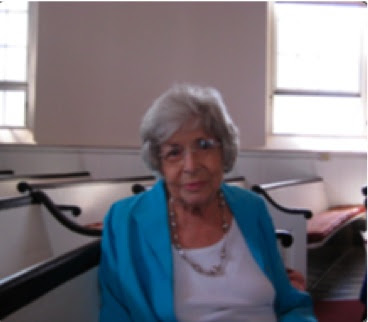
Chris, Hallie and I played this week at the funeral of our good friend Leah Robinson, who lived in Connecticut. We played 19th century American hymns accompanied on the Ashborn guitar. Amazing Grace, Ps. 23 to the tune Resignation, Jerusalem my happy home (because she always had a happy home when we were gigging in the New York area and stayed at her place) to Land of Rest and Shall we gather at the river. Here is a picture of Leah and her obit.

Leah D. Robinson, 87, wife of the late David E. Robinson of Norwalk, died Sunday, July 4, 2010, in the Norwalk Hospital.

Born October 31, 1922 in Vancouver, British Columbia, she was the daughter of the late William and Mary Ruth Eaton. Mrs. Robinson attended art college in Vancouver and served in the Women’s Royal Canadian Naval Service in London during World War II. She married David Robinson on September 16, 1946. They moved to Norwalk in 1956. In the mid 1960s, she was librarian at Kendall Elementary School. She later worked with her husband in the family business in Danbury, CT. In 2004, she took responsibility for the business, Process Measurement and Controls Inc., when her husband died. Known for her generosity, she opened her home to young people from around the world who wanted to learn English and have the experience of living in America. Some of her most cherished memories were of frequent trips to Mexico and Britain and summers at the family cabin in the Canadian woods.

She is survived by her daughters Joan Robinson of Toronto, Ontario and Mary Susan Bosch, her husband Steven Bosch, and their three children, Leah, Carter, and William, of Redding, CT. She is also survived by her sister, Grace Amanda Cooper, of Surrey, BC.