Saturday, February 23, 2013


Here's the program and notes Mar. 2nd concert, 8PM Heliconian Hall 35 Hazelton Ave. Toronto called You Who Hear in These Scattered Rhymes...
A manuscript of the first poem in Petrarch's  Canzoniere
'Voi che ascoltate... ' You who hear...
You Who Hear in these Scattered Rhymes…
Preludio Terzo Giovanni Kapsberger (c.1580-1651)
Voi ch’ascoltate Sigismondo d’India (c.1582-1629)/Petrarch
Amarilli mia bella Giulio Caccini (1551-1618)/(A. or G.B.) Guarini
Tutto il dì piango Jacopo Peri (1561-1633)/Petrarch
Aria di Fiorenza Kapsberger

Vedrò’l mio sol Caccini/Giovanni Battista Guarini
Torna, deh torna Caccini/Ottavio Rinuccini
O miei giorni fugaci Peri/Rinuccini

Laura Soave Fabritio Caroso (c.1530-after 1605)
Passamezzo Michelagnolo Galilei (1575-1631)

Cantata Sopra la Ciaccona Giovanni Felice Sances (c.1600-79)/Anon.

Donna, I’ vorrei dir molto d’India/Giambattista Marino
Tempesta di dolcezza Giovanni Nauwach (c.1595-c.1630)/Marino

Intermission

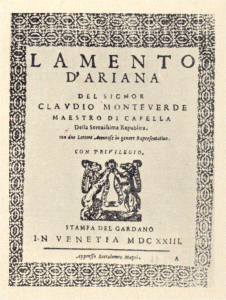
Lamento d’Arianna Claudio Monteverdi (1567-1643)/Rinuccini

Corrente detta la Brava/ Pietro Paolo Melli (1579-after 1623)
Corrente detta la Sansona/Alemana detta la Gentile
Saravanda in Varie partite Alessandro Piccinini (1566-c.1638)

O bella destra d’India/Torquato Tasso
Giunto a la tomba d’India/Tasso

Ho visto al mio dolore Biagio Marini (1594-1665)/Alessandro Striggio
Odi Euterpe Caccini/Anon.
The Harmony of the Planets and the Monochord, which Vincenzo Galilei, and his sons Galileo and Michelagnolo all worked on. 
Vincenzo Galilei would have done enough for history if he had only been the sire of Galileo the astronomer, but with Jacopo Peri and Giulio Caccini he was a key member of the group that theorized the development of ‘The New Music’. Galilei prescribes, following the Ancient Greeks and Romans, the way the composer should work; he should observe the speech of ‘the man infuriated or excited, the married woman, the clever harlot, the lover speaking to his mistress as he seeks to persuade her to grant his wishes, the man who laments…’ and follow the diction, pitch and rhythm of their speech when setting the affections of the poetry since ‘the most important and principal part of music is the imitation of the concepts of the words’. The composer for solo voice becomes a partner with the poet in the exhibition of the Classical rhetoric which permeates all the texts of the Renaissance. He almost inhabits a position between musician and drama director, telling the performer where the speech is agitated and quick, where the exclamations of the voice rise or fall into despair and below the musical clef. Peri and Caccini were the leading composers in this style. A contemporary of theirs opines that Peri’s ‘solo madrigals’ as they called them, were more true to the texts, while Caccini’s had more grace.

Claudio Monteverdi famously set his own Orfeo, with a libretto by Striggio, soon after opera's debut as Peri and Caccini's pasticcio. Though he could charm the ear as well as anyone Monteverdi was primarily an intellectual composer. When later in life he was given a text to set which was to be sung by the wind, Monteverdi said ‘Ariadne moved the audience because she was a woman.’ Indeed we are told that in the audience at the first performance of his opera L’Arianna (1608) we are told that ‘not one lady failed to shed a tear.’ Poor Ariadne has been dumped on a beach by her lover and the storms of her shifting emotions are captured by Monteverdi in an inventive tour de force.

Sigismondo d’India was a minor nobleman from Sicily who worked with the poet Marino at the Savoy court. His solo songs match the power of Monteverdi at his best, as evidenced in his setting of Petrarch’s Voi che ascoltate. This setting is almost a microcosm of all the techniques of the new music and the sonnet is carefully divided into its parts and the 'turns' of emotional gestures set by sometimes drastic key changes. Marini, Sances and Nauwach all represent the movement of the new music north of the Alps. Marini worked in Neuberg and Dusseldorf, Sances in Vienna and Giovanni Nauwach was in fact, Johann.

The organization of the music around the hyper-impassioned poetry leads, of course, to rather 'expressionistic' music. Another organizing principal the Baroque used was ground basses. Caccini's Torna uses the Romanesca, or its close relative the Passamezzo Antico. Another famous ground, often heard with its original tune, was taken from a tiny part of huge entertainment for the wedding of Caccini and Peri’s patron, Grand Duke Ferdiniand de’Medici, to Christina of Lorraine in 1589. This tune is sometimes called ‘Ballo della Gran Duca’ or ‘Laura Soave’ or, as in Kapsberger’s version, Aria di Fiorenza.
Petrarch

Voi ch’ascoltate - Petrarch
You who hear in scattered rhymes the sound
of those sighs with which I nourished my heart
at the time of my first youthful error,
when I was in part another man from what I am now,
for the varied style in which I weep and speak
between vain hopes and vain sorrow,
where there is anyone who understands love by experience,
I hope to find pity, and not only pardon.

But now I well see how for a long time
I was the talk of the crowd,
for which I often am ashamed within;
and for my raving, shame is the fruit,
and repentance, and the clear knowledge
that whatever pleases in the world is a brief dream.

Amarilli mia bella - Guarini
Amaryllis, my love, do you not believe
you are my heart's desire?
Believe it, and if doubt assails you,
take my arrow, open my breast
and you will find written in my heart:
Amaryllis is my love.

Tutto ’l dí piango - Petrarch
All day I weep: and then in the night
when wretched mortals take their rest,
I find myself weeping, redoubling my ills:
so I spend the time that’s mine in tears.
My eyes are drowned in sad moisture,
the heart with pain: and I am the worst
of creatures, the arrows of love pierce me
so all over, now that peace is exiled.

Alas, with one sun following on another,
one shadow after another, I’ve already passed
the greater part of this death, that they call life.
Another’s failing grieves me more than my own:
that living Pity, and solace of my faith,
sees the fire burning, and will not help me.

Vedrò’l mio sol - Guarini
I will see my sun; I will see, before I die,
That longed for day
That makes your ray come back to me.
O my light, o my joy.

It is sweeter to be in torment for you
Than to be in delight for another.
But without death I will not be able to suffer
Such a long martyrdom
And if I die, so will die my hope ever
To see the dawn of such a beautiful day.

Torna, deh Torna - Rinuccini
Return my little one,
Return, for without you I am without my heart!
Where do you hide, alas?  What have I done
That I neither see nor hear you Love?
Fly now to my arms; dissolve that bitter pain
Which consumes my heart.
Hear the plaintive sound of my voice,
Begging forgiveness with tears and sighs.
If I see not, I die not,
But seeing not, I live not;
Therefore I am dead, though not deprived of life.
O, miracle if love, ah, what a strange fate,
That living should be not life or dying death.
St. Jerome gets blasted by the Trumpet of Doom by Ribera
O miei giorni fugaci - Rinuccini
O my fleeting days,
O brief life, alas, you have already disappeared.
Now I hear, or seem to hear, the inexorable trumpet
calling me before you,
O just Lord. Already the awesome sound
resounds in my heart:
Lord have mercy on me and forgive me.

Cantata Sopra la Ciacona - Anon.
O pretty warbling birds
upon the breeze disperse
your querulous sounds
and tell of how I grieve,
of how from deep within my breast
sighs heartfelt I send forth.
Go, my languid plaintive sighs,
go to my Lydia with the wind
and tell her that in pain
I waste away without respite.
Perhaps she will now yield,
she who was then unmoved
by my sobbing and my tears.
Perhaps she'll give me peace,
perhaps she'll give me life.
Perhaps, hostile no more,
she'll say that she will grant
both peace and life
to him who was in love so bold.
A cold glance indeed reveals
angelic beauties of the soul.
He drew the dart and tore the veil.
He stole the honour with guileful zeal.
My honour, oh my honour.
Torn is now my veil,
cries out the hapless maiden
with woeful anguished wails.
And you, my sighs, reply to her
Lydia, Lydia, hush down your cries
and a virgin you are still,
for when on you my ardor I did vent
no one was there to see
no one but Lydia, my love, and me.
Marino
Donna, I’ vorrei dir molto - Marino
Woman, I would say so much
but my hesitating tongue is held by Love.
Though my tongue is silent, my glance is begging.
I am as foolish as I am miserable
not knowing what I want.
But you, who are in my heart and mind,
you certainly can read my thoughts
and see in my heart what I might want.

Tempesta di dolcezza - Marino
A tempest of sweetness
is what Love pours out upon my soul
while I kiss you, oh my treasure.
Languishing, I die.
A flood of kisses has submerged my soul.
Already from your lip,
at the sweet sonorous thunder
behind the lightning of your laughter
the thunderbolt of your tooth
has killed me.
Ariadne got married to Bacchus later and lived happily ever after.
Lamento d’Arianna - Rinuccini
Let me die, Let me die!
Whom would you wish to comfort me
In such a hard fate,
In such a great suffering?
Let me die!

O Theseus, my Theseus!
For I want to call on you, since you are mine.
Though, alas, cruel man, you flee from my sight.
Turn back my Theseus,
Oh God, turn back and look once more upon her
Who abandoned her country and her kingdom for your sake.
And who now on these shores,
A prey to pitiless wild beasts,
Will leave her bare bones!

O Theseus, my Theseus!
If you knew, Oh God, alas the torment
Of miserable Ariadne, Perhaps, in remorse,
Even now you would turn back your prow to shore.
But with gentle breezes you go happily on,
While I remain, weeping,
Athens prepares you greet you with joyful festivities,
While I remain, weeping, a prey to the wild beats of these lonely shores.
Both your aged parents will embrace you with joy
But I will see you no more, O mother, O  my father.

Where, where is the faith you so often swore to me?
Is this how you restore me to my ancestor’s ancient throne?
Are these the crowns with which you adorn my hair?
Are these the sceptres, are these the jewels and the gold?
To leave me  abandoned,
To be torn by and devoured by wild beasts?
Ah, Theseus, O my Theseus,
Will you leave me to die and weep in vain crying for help,
Poor wretched Ariadne, who gave you her trust, glory and life?

Oh! you don’t even reply! To my lament his ears are as deaf as a serpent’s
O, storms, O hurricanes, O Gales
Push him down beneath the waves!
Hurry sea-monsters and whales
Fill the bottomless deep with his foul limbs.
What am I saying? Why an I raving?
Alas! Wretch that I am, what do I want?

O Theseus, O my Theseus,
It was not I who uttered those savage words.
My grief spoke, my anguish spoke,
My tongue spoke, yes, but not my heart!

Unhappy woman, I still give way
To my betrayed hope, and still
After so much scorn, the fires of love are not quenched!
O death, now extinguish the worthless flames!
O mother, O father, O proud homes of the ancient kingdom where my golden cradle rested.
O servants, O faithful friends (Ah unworthy fate)
See where wicked fate has led me.
See the grief I have inherited from my love, my trust and his deceit.
One who loves too well and trusts too much such a fate endures.
Tasso
O bella destra - Tasso
O beautiful right hand that offered me
sweet assurance of friendship and of peace,
look at you now...how can you suffer me?
And how, you loveliest limbs...are not these
the evidence of my beastlike enmity,
and sad and deadly signs of wickedness?
O my eyes, wicked as my hands, to gaze
upon the wounds that they have made.

Giunto ala tomba - Tasso
He reached the tomb, the prison house where heaven
had ordained for his living soul to dwell,
and on the stone he fixed his eyes, cold, wan,
speechless and still as if insensible.
At last he broke into a languid sigh,
Alas, as a river of weeping broke the spell.
‘O stone to highly loved, and honoured, keeping
my spirit’s flames within, without, my weeping.’

Ho visto al mio dolore - Striggio
I saw, to my grief,
shedding thousands by thousands,
from her pitiful eyes, dewy drops,
the gentle Silvia;
such as never shed before
when stung by pain to the heart
over the dead Adonis
was the love goddess.
And miserable me, who
from such water my fire takes strength,
and it inflames me all the more.
St. Cecilia with Alabaster Apple and Theorbo
Odi Euterpe - Anon.
Hear, Euterpe, the lovely song
that Love urges me to compose
and help me attune to these sweet accents
the strings of my golden lyre.
Sweet Love whispers to me verses
and compels me to sing sweetly.

 My  fair Lydia covered her bosom
with the chaste veil of night
but the moon high in the sky
uncovered it and I beheld
a wondrous treasure
brightly lit by golden flames.

Your fair bosom thus unveiled
cast out radiant flames asparkle.
While your bosom I admired
with its golden fire ablazing
I beheld in so much splendour
other treasures to desire.

Oh my Lydia, your bright eyes
shine more splendid than the sun.
They cast light upon your bosom
for my own eyes to delight,
the serene glow of your gaze
ever brightening your graces.

My heart was burning sweetly.
Every flame in Lydia's breast
made my eyes rejoice the greater,
and my heart, already wounded,
wanted wounding ever more.

Then my eager gaze was blinded
by the light of many a beauty,
sated it was not by any
restless on it searched for others,
so my eyes... they died of pleasure
on two alabaster apples.

Monday, February 11, 2013

Here's the program for the Hail Bishop Valentine Concert, 7:30PM, Feb. 12, 2013, Charbonnel Lounge, St. Michael’s College, 81 St. Mary Street. Come one, come all. 


Preludium John Dowland (1563-1626)
Excerpt from 'The life and death of our late most incomparable and heroique prince, Henry Prince of Wales by Sir Charles Cornwallis
So parted you John Coprario (c. 1570-1626)
The Prince his Almayne Robert Johnson (c.1583-1634)
John Donne
An Epithalamion, or Mariage Song on the Lady Elizabeth, and Count Palatine being married on St. Valentines Day by John Donne, Stanza 1
Come away, come sweet love Dowland
The Lady Elyza: her masque Johnson

Epithalamion Stanza 2
When Laura smiles Philip Rosseter (1567-1623)
Solus cum Sola Dowland

Epithalamion Stanza 3
Sweet stay awhile Dowland
Delyght Pavan John Johnson (c1545-94)

Epithalamion Stanza 4
Deare, if you change Dowland
Delyght Gallyard John Johnson

Epithalamion Stanza 5
Cleare of cloudie Dowland
Nowe to bed Anon.

Epithalamion Stanza 6
Time stands still Dowland
My Hart is Surely Sett Anon.

Epithalamion Stanza 7
Faine would I wed Campion
Greensleeves Francis Cutting (c.1550-1596)

Epithalamion Stanza 8
There is a Garden in her face Robert Jones (1577-1617)


George V,  grandad of Elizabeth II,  from the House of Windsor, and Charles I, brother of 
Princess Elizabeth of the House of Stuart. Family resemblance?

Program Notes
‘I may be uninspiring, but I’ll be damned if I’m alien!’ British King George V is supposed to have said in response to H.G. Wells’s criticism of the royal lack of charisma and excess of Germanness. The charisma problem was all George’s own, but we can pinpoint the source of the latter.

The first ‘British’ king, James VI of Scotland, inherited the English Tudor crown and soon set about marrying off his children to various continental dynasties to cement his ‘prince of peace’ policy. As you will hear in the reading from the Cornwallis letter, James’s daughter Elizabeth was matched with various princes, but public opinion, and particularly that of her brother Henry, Prince of Wales, settled on Frederick, Elector Palatine, who Cornwallis calls by another of his titles ‘The Palsgrave’. The sickly Henry died after a vigorous game of tennis with Frederick in October 1612. We present a song, words by Campion, music by Coprario, from the point of view of Elizabeth on that tragedy.

The official commemorative poem of the Royal Wedding of Valentine’s Day, 1613 was by John Donne, which you hear tonight read in the pronunciation of the time. Donne and Campion (his texts are heard here set by Jones, Rosseter and himself as well) seem to have competed as the official court mouthpieces. Between the verses of Donne’s wedding poem we sing some love songs of the period untouched by the cruel disdain of the harsh mistresses that breaks the hearts of so many poets and songwriters in that age of melancholy, along with some lute pieces the titles of which might allude to the delights of new love.

And about the Germanness: Frederick and Elizabeth’s grandson came to the British throne, not speaking a word of English, as George I, of the House of Hanover and his great-great-granddaughter Victoria still spoke German around the house. Public opinion in WWI forced George V to adopt the last name Windsor and lose the German sounding ‘House of Saxe-Coburg and Gotha’ handle. God Save the Queen.


Sunday, January 27, 2013


On Friday we met with Prof. David Klausner who is reading verses of the wedding poem, or epithamalion, Hail Bishop Valentine by John Donne about the wedding of Princess Elizabeth Stuart, daughter of King James I of the newly United Kingdom, as part of our next concert (Feb. 12th at Charbonnel Lounge, St. Michael’s College, 81 St. Mary Street, 7:30 PM, Tickets $25/20). Between the verses of the Donne poem we will sing Jacobean love songs and I'll play some lute solos with titles like Solus cum Sola (He and she alone together) and The Lady Elizabeth, Her Mask. Any time you meet with David it's a fun time as you can see from the picture. He is 'Acting Director of Celtic Studies' at St. Mike's College this term. You'd think such a title would get him a bigger office. David wrote the book, or at least large chunks of it, on how to pronounce early modern English for singers.

Princess Elizabeth Stuart
Now, this marriage we're celebrating the 400th anniversary of was to a German prince and, as they all were then, was a dynastic marriage to cement aspects of foreign policy. In fact, that dynasty is still on the throne of  Britain as well as, indeed, Canada, Australia and many, many more. (18th century British King George I of Hanover was Elizabeth Stuart's grandson and Queen Victoria's great-grandad, who was in turn the great-grandmother of both the present Queen Elizabeth and Prince Phillip.)

In the fall we did a concert on the 400th anniversary of the death of Henry, Prince of Wales, Elizabeth Stuart's big brother, who would have been Henry IX, had he lived. For the upcoming show we wanted to sing a song which we did at that concert, music by John Coprario and words by Thomas Campion, on Elizabeth's reaction to her brother's death, but there is no mention of the sad event in Donne's poem, though it was only a few months before the wedding. To introduce the Coprario/Campion song we'll hear a reading from this chunk of text which is from a book called The life and death of our late most incomparable and heroique prince, Henry Prince of Wales. A prince (for valour and vertue) fit to be imitated in succeeding times and purports to be a letter from Sir Charles Cornwallis to a friend.

In it you'll read about the excitement about the Royal Wedding match, which includes those foreign policy questions of whether to chum up to the Spanish or someone more Protestant. You'll read about how involved Henry Prince of Wales was in the negotiations for the marriage and how he would hang out  with his soon to be brother-in-law, Frederick, Count Palatine, here referred to as 'the Palsgrave'. And you'll read about the sad end after overdoing it at sports.

Much about the beginning of this summer, there could almost be no newes heard, but of his sister's marriage, of which many speeches went currant, according to the divers affections of protestants and papists; some wishing her to be married to the king of Spaine, some to the prince of Savoy, some to the young Landsgrave, and some to his highnesse the Palsgrave, her now husband. But he following the streame of his father's well setled affections, for Great Britain's eternal felicity, and terrour of all papists, did onely fancy the Palsgrave's motion, shortly after advancing the same by all meanes possible at the comming of the right honourable the count Hannaw, the Palsgrave's great ambassador, whose errand as the speech went, was to knit up this match, unto whose suite his highnesse did not onely give way, and second the businesse, but also insigne of love entertaine, and countenance the said count (next unto his majesty) more than any, never resting until all was agreed, as (thankes be to God) it is now finished.
Henry, Prince of Wales
At last to Saint James's he came, seeming well, but that he looked pale and ill, so that sundry did speake suspiciously of his lookes, fearing some distemper in his body: yet so strong was his minde, that complaining of nothing, he did beare out the matter very bravely in shew, being so well, that he gave his physitian (who had waited a long time) leave to goe home to his house; meane while his indisposition still continuing and increasing, there might have beene perceived in him a sudden great change; for he began to be displeased almost with every thing, and to be exceeding curious in all things, yet not regarding, but looking, as it were, with the eyes of a stranger upon them; for sundry things shewed him, which before he had wonted to talke of, aske questions, and view curiously, he now scarce vouchsafed to looke upon, turning them away with the backe of his hand, and departing, as who would say, I take pleasure in nothing; yet was he wonderfully busie in providing, and giving order for every thing belonging to his care, for his sister's marriage, advancing the same by all meanes possible, keeping also his highnesse the Palsgrave company, so much as conveniently he could, together with count Henry his excellencie, Grave Maurice his brother, whom he also much honoured and esteemed, belike because of a noble and heroicke disposition, which he saw in him fitting his humour, with whom he used to play often at cardes, and tennis, delighting much in his company; and above all the rest, one great match they had at tennis, on Saturday the 24. of October, the day before his last sicknesse, where his undaunted courage, negligently, carelesly, and wilfully (neither considering the former weake estate of his body, danger, nor coldnesse of the season) as though his body had been of brasse, did play in his shirt, as if it had beene in the heate of summer; during which time he looked so wonderfull ill and pale, that all the beholders took notice thereof muttering to one another what they feared; but he (the match being ended) carried himself so well, as if there were no such matter, having all this while a reasonable good stomack to meat; yet this night, at his going to bed, complaining more than usual of his lazinesse and head-ache.
Frederick V, Elector Palatine
But oh, whether goe I now? must I againe launch out into a sea of sorrowes, adding more griefes unto our yet bleeding wounds? Oh Death! was there no remedy? When wilt thou make an end? shall the grave devour alwayes? was thy charge so strait, that thou could'st shoote neither at great nor small, but at the prince of our Israel? doe sweete-smelling flowers so much delight thy grisly ghastly senses appetite, that thou wouldst gather none but our fairest, well beloved, scarce blowne rose? why didst thou so soone robbe us?

Sad stuff. Sadder this that Mr. Chamberlain writes to Sir Dudley Carleton on the 12th of November 1612.

The Lady Elizabeth is much afflicted with this loss, and not without good cause ; for he did extraordi- narily affect her, and during his sickness enquired after her, and the last words he spake in good sense, they say, were "Where is my dear sister?


Monday, December 31, 2012

Here's the program for the NYD concert, New Year's Day at 2PM, 2nd at 8PM at Heliconian Hall, 35 Hazelton Ave. Doors open 1/2 hr. before the concert.

A New Year’s Day Concert            

Sonata da Chiesa Op. 1 No. 1 Arcangelo Corelli (1653-1713)

Salva nos from Op. 1 No. 1 Francesco Bonporti (1672-1749)

Toccata – Partite sopra l’aria della Folia Alessandro Scarlatti (1660-1725)

Sinfonia per Liuto Anon.
Largo-Allegro-Largo-Allegro

Sonata da Chiesa Op. 3 No. 5 Corelli

Intermission

Prelude- Allemande-Prelude Thomas Baltzar (1631?-1663)

Serenata con Violini Scarlatti
Sinfonia-Recit -Aria, Largo-Recit-Ritornello & Aria-Recit-Aria, Andante-
Recit-Aria, Largo-Recit-Recit Accompagnato


Program Notes 
Few composers have been as famous and influential in their own lifetimes as Arcangelo Corelli. His trio sonatas, solo sonatas and concerti grossi were the model for all composers who wrote in those Italianate forms. Indeed, Corelli may have been a little chauvinistic when it came to French music. Corelli was in charge of the orchestra which gave the debut of the young Handel’s oratorio La Resurezzione. Handel had composed a very French Overture, rather than an Italianate Sinfonia to introduce the piece. Corelli’s orchestra fell apart and could not get through this movement, and the Italian said to Handel ‘Ma, cara sassone, - But my dear Saxon, this is in the French style, which I do not understand.’ Handel went back to his desk and composed something more Italianate.  

Corelli’s Opus 1 and 3 trio sonatas come with partbooks labeled ‘violino primo, violino secondo, organo’ and ‘violone o arcileuto’. The violone (what we would call a cello, but maybe a biggish one) and archlute book has melodic material shared with the violins, but also has the same figures above the notes as the organ part, which suggests that the archlute player, at least, did double duty as melodic bass and chordal instrument.


A contemporary description of the demeanor of Corelli, who is said to have dressed in all black, tells us that in performance ‘it was usual for his countenance to be distorted, his eyes to become as red as fire, and his eyeballs to roll as if in an agony’. Here then is a man with the diabolical image which Tartini’s ‘Devil’s Trill’ sonata alludes to and the Romantic violinist Paganini later exploited. Indeed, Stravinsky’s A Soldier’s Tale and 1970s country rock hit The Devil Went Down to Georgia also feature violin playing devils. Thomas Baltzar moved to England from his native Germany during the Commonwealth, that interregnum where there was no British court, and so, no courtly centre for music making. The composer John Wilson, previously musician-in-ordinary to Charles I and songwriter for Shakespeare plays, was making a living presenting public concerts in this period and the stupendous violinist Baltzar wowed Wilson's audience with the new-fangled German violin playing techniques. (English players had been rather stuck in a Renaissance rut, what with the fighting a civil war and everything.) John Wilson came out of the astounded audience came and checked Baltzar’s feet to make sure that he did not have devil’s hooves for feet ‘because he acted beyond the parts of a man’ with his virtuoso performance. The diarist John Evelyn says that on March 4th, 1656 ‘This night I was invited by Mr. Roger L'Estrange to heare the incomperable Lubicer (Baltzar was from Lübeck) on the Violin’. 

Not Thomas Baltzar

That the manuscript that contains the anonymous Sinfonia for archlute and continuo comes from a manuscript which had been in the library of a Czech/Austrian dynasty of counts means it is probably Italian. Lutenists and theorbo players like Francesco Conti were employed at the Imperial court throughout the 18th century and Vivaldi, who died and is buried in Vienna, wrote some lute works in a texture that was being cultivated in German speaking lands. The Corelli-esque slow movements of this piece suggest the type of ornamentation that Estienne Roger published in Amsterdam claiming that they were Corelli’s own very florid ornaments.  

Since so few High Baroque operas beyond a few of Handel’s are performed today Alessandro Scarlatti, who was a successful composer in that form, is perhaps less famous today than he might be. Similarly, his keyboard works are not as famous as those of his son Domenico though as you will hear, he was a spectacular composer for the harpsichord. The chord changes of his variations on La Folia will not be unfamiliar to regular Musicians In Ordinary concert-goers, who will have heard violin variations, guitar variations and even vulgar political songs performed to the stock bass line and tune which developed from a guitar ground of the early 17th century. (Listen for the ‘strum-strummmm-a-strum-strum’ rhythm.) Corelli has his own variations on the Folia for violin and continuo and Liszt and Rachmaninov (who erroneously calls it a ‘Theme of Corelli) wrote variations on it in the 19th and 20th century. 

An early guitar alfabeto notation Folia shows how the strums go (down, down, up). 
There's a bit more information in the one Philip will play. 

Alessandro Scarlatti was also a very prolific composer of cantatas both with just continuo and with other instruments, again, a much under-performed genre considering what a large slice of so many composers’ works it comprises. Very often the Cantata’s text is a description of the joys or sorrows (usually the sorrows) of an amorous shepherd, in the kind of perfect love only possible in the pastoral tradition. The pains of this shepherd are usually reported by another shepherd looking on. This all sounds terribly mannered to us today, but the pastoral tradition was used for centuries to demonstrate how perfect political entities might work, how the perfect host might behave, and, in the case of song, how the perfect lover might feel. Is it any less mannered than a present day hospital drama or cop show? 

Throughout the cantata we see Scarlatti deploy the bag of tricks used by a composer of operatic ‘music-drama’. He moves seamlessly between speech-like declamation and arioso passages in the recitatives as the emotions of the shepherd swirl. The arias, with their infectious melodies, narrow the focus onto one ‘affect’ of the spurned lover and in the sad airs, use suspensions in the violins to paint his anguish. 

Happy New Year. 

Guests

Christopher Verrette has been a member of the violin section of Tafelmusik since 1993 and is a frequent soloist and leader with the orchestra. He holds a Bachelor of Music and a Performer’s Certificate from Indiana University and contributed to the development of early music in the American Midwest as a founding member of the Chicago Baroque Ensemble and Ensemble Voltaire, and as a guest director with the Indianapolis Baroque Orchestra. He collaborates with many ensembles around North America, performing music from seven centuries on violin, viola, rebec, vielle and viola d’amore. He was concertmaster for a recording of rarely heard classical symphonies for an anthology soon to be released by Indiana University Press, and most recently collaborated with Sylvia Tyson on the companion recording to her novel, Joyner’s Dream.


Edwin Huizinga has toured throughout the world with Tafelmusik and performed with the Aradia Ensemble and I Furiosi. He has soloed with the Oberlin, Note Bene and San Francisco Baroque Orchestras, the San Bernardino Symphony, the Carmel Bach Festival Orchestra, the Sacramento Baroque Ensemble and the Kitchener-Waterloo Chamber Orchestra. He has been the concert master of the San Francisco Bach Chorale, the guest director of the Atlanta Baroque Orchestra, has toured with the Wallfisch Band under Gustav Leonhardt and was a guest artist at the Conservatory of Amsterdam. Currently a member of the ensemble Passemezzo Moderno, and recently made his Carnegie Hall debut with the Theatre of Early Music, he has a passion for bringing chamber music to the people and was a founding member of the Classical Revolution in San Francisco in 2006. Throughout 2012 he toured extensively with his band The Wooden Sky. 


Philip Fournier is Titular Organist of the Toronto Oratory, Director of the Chant Schola & Oratory Children’s Choir. He specializes in Gregorian Chant, which he studied at Solesmes with Dom Saulnier. He gives solo organ recitals regularly at the Oratory, is guest organist of the Toronto Tallis Choir, artistic director and continuo player of the St. Vincent’s Baroque Soloists, and is active as a composer. His organ and harpsichord teachers have included James David Christie at the College of the Holy Cross, Russell Saunders, Paul O’Dette & Arthur Haas at the Eastman School of Music, and Robert Clark & John Metz at Arizona State. Mr. Fournier was the first Organ Scholar of the College of the Holy Cross, Worcester USA, and was subsequently named a Fenwick Scholar, the highest academic honour given by the College. He was one of the recitalists of the Chapel Artists Series there in 2011. He won the Historical Organ in America competition in 1992 and performed at Arizona State University on the Paul Fritts organ, and was awarded a recital on the Flentrop instrument at Duke University. Mr. Fournier was Organist & Director of Music at the Cathedral of the Immaculate Conception, Portland Maine, from 2000-2007, during which time he founded the Cathedral Schola Cantorum for the restoration of Gregorian Chant and Renaissance Polyphony to the Stational Masses of the Diocese of Portland.


Wednesday, November 21, 2012


On 7th of November we were up at York University for a co-lecture about Hamlet and the lyric.

Seth Lerer, Dean of Arts and Humanities at University of California at San Diego gave a talk for the first part of the event. To call him a ‘Renaissance Man’ would be an understatement given the wide range of his scholarship. Seek out his appearances on various podcasts. Check his Amazon books too.

We talked about some of Ophelia’s songs, her association with the lute in one contemporary stage direction (focused on here by Prof. Deanne Williams, the organizer of the event), some songs that she should have been singing if she had been a good girl and broadened out to some melancholy emblems that are associated with Hamlet and that occur in contemporary song lyrics.

Seth had talked about how so many songs and poems seem to be coming from the wrong mouths. The bookish Hamlet writes the worst doggerel lyric poem in a letter read out by Polonius. The rude mechanical grave digger sings a song with words taken from the posh anthology of courtly poetry Songes and Sonettes, known as Tottel’s Miscellany. And Ophelia sings, with her lute in hand some of the rudest ballad songs. But not only that, we found that the texts she sings that appear to be less rude are actually associated with other near-contemporary ballad texts that where an older, richer man seduces, or attempts to seduce, a younger woman.
Would the audience at the original performances have been saying ‘Oh, she’s singing that tune that has the other words of The princely wooing of the fair maid of London by King Edward’ (to the tune of Robin is to the Greenwood Gone) and ‘Oh, that’s the one that has the other words where the rich merchant is trying it on with Bess the farmer’s wife’ (to the tune of Walsingham)?
We then sang Coy Daphne fled/Chaste Daphne fled (a 2 for 1 song with different texts that praise and mock chastity) and Like as the Lute (a kind of patchwork quilt of musical definition demonstrations for the lute song student) from John Danyel’s songbook dedicated to Miss Anne Green as an example of what young lute-learning women should be singing. After that we looked at the mega-hit Lachrimae/Flow my tears from John Dowland’s Second Book of Songs, the melancholy poet of which has many parallel symptoms with Hamlet. Download us singing that here if you haven't already.


Sunday, November 11, 2012


Here's the program and notes for our next show, Aria di Fiorenza, at Charbonnel Lounge, St. Michael’s College, 81 St. Mary Street, 7:30 PM Nov. 13th 2012 (Tickets $25/20). The translations are by Laura Pietropaolo, who is doing the pre-concert talk on Baroque poetry.

Aria in Ottava Rima Cosimo Bottegari (1564-1620)
So ben mi c’ha bon tempo Orazio Vecchi (1550-1605)
Donna s’el cor di ghiaccio Ippolito Tromboncino (fl. 1540s-60s)
Rifuta ogni diletto Bottegari

Fantasia Bottegari
Ancor che col partire Cipriano di Rore (1516-65)/Bottegari

Amarilli mia bella Giulio Caccini (1551-1618)
Tutto’l dì piango Jacopo Peri (1561-1633)
Vedrò’l mio sol Caccini
O miei giorni fugaci Peri

Aria in Terza Rima Bottegari
Timor et tremor Bottegari
Madonna, il vostro petto Alessandro Striggio (c 1535-c 1595)
Amor, che deggio far? Fabricio Dentice (d. 1581)

Ballo alla Tedesca/Romanesca/ Bottegari
Ballo Forestiere

Torna, deh torna Caccini
Aria di Fiorenza Giovanni Kapsberger (c.1580-1651)
Dalla porta d’Oriente Caccini

Program Notes
The Medici family at the end of the 16th century were not as magnificent politically as they had been a century earlier. But despite being under the sway of superpowers, over several generations they were increasingly ‘aristocratized’, becoming Dukes of Florence in 1532 and upsizing to Grand Duke of Tuscany in 1561. This meant their education moved away from hard headed matters that might help a banker-politician, the occupation of the earlier Medici, to a more rarefied course of Humanist, that is, Ancient Greek and Latin, studies. This development was great news for the arts. The pet intellectuals of Ferdinand, Grand Duke from 1587, imitating, as they thought, the Ancients, invented Baroque music and opera. But ‘The New Music’, as Caccini called his publication of the earliest Baroque solo song (see the title page below), was performed side by side with the great Renaissance composers if the workaday manuscript of Cosimo Bottegari is anything to go by.

Vincenzo Galilei would have done enough for history if he had only been the sire of Galileo the astronomer, but with Peri and Caccini he was a key member of the group that theorized the development of ‘The New Music’. Galilei prescribes, following the Ancients, the way the composer should work; the composer should observe the speech of ‘the man infuriated or excited, the married woman, the clever harlot, the lover speaking to his mistress as he seeks to persuade her to grant his wishes, the man who laments…’ and follow the diction, pitch and rhythm of their speech when setting the affections of the poetry since ‘the most important and principal part of music is the imitation of the concepts of the words’.

The composer for solo voice almost inhabits a position between musician and drama director, then, telling the performer where the speech is agitated and quick, where the exclamations of the voice rise or fall into despair and below the musical clef. Jacopo Peri and Giulio Caccini were the leading composers in this style. A contemporary of theirs opines that Peri’s ‘solo madrigals’ as they called them were more true to the texts, while Caccini’s had more grace.

Cosimo Bottegari’s first employment was at the court of Duke Albrecht V of Bavaria in Munich. Here he seems to have got into a professional rivalry with the Kappelmeister, Orlando di Lasso, one of the greatest names of late renaissance music. Lasso pioneered the Mannerist, dissonant music of the Gesualdo, Marenzio and early Monteverdi which can be heard in his Timor et tremor, a piece for a six part choir arranged for one voice and lute by Bottegari.

After the death of Duke Albrecht Bottegari moved to Florence. He had visited the court of Cosimo, the first Grand Duke of Tuscany, on diplomatic missions, and on the accession of Ferdinand de’ Medici he appears to have become a permanent court fixture, and, being knighted, rose above the station of that of a salaried performer to one of ‘gentleman’.

Bottegari’s book is the only source (except for one duplicate in another manuscript) of music of Ippolito Tromboncino, the most famous singing teacher in Venice in the late 1500s. Tromboncino was friends with the satirist Pietro Aretino and the painter Titian but the dearth of surviving songs by him makes it difficult to assess whether he is the equal of those two luminaries.

Ancor che col partire seems to be a song but the melody is always present in the lute part, arranged from the four voices of the original madrigal and sometimes decorated in the ‘accompaniment’.  Solo performance seems an option at least. This madrigal had been around for about half a century when Bottegari arranged it for lute. The manuscript makes clear that arranging the lower voice parts for lute was one way of performing a madrigal as is demonstrated by the versions of partsongs by Striggio, Lasso and the Neapolitan lutenist Dentice, who sang to his own accompaniment in, a contemporary Englishman tells us, in the Spanish ‘fayning’ (ie. falsetto) fashion.

The Bottegari manuscript has a number of tunes with no words marked with rubrics like ‘Aria in terza rima’ or ‘Aria in Ottava Rima’ or ‘Sonneto’. These are records of an earlier tradition of having stock tunes on hand to sing different poetic forms to. We have selected texts from the most famous poems in ottava rima (a passage from Orlando Furioso which introduces Ariostos’s epic and our performance) and terza rima (a famous passage from the Inferno where a couple is seduced into lovemaking by the book they are reading.) If a passionate courtier had rushed up to Bottegari and begged him to sing a new terza rima he had written to his love, the lute player would have had a tune which fit the poem handy.

The Romanesca bass and chord changes can also be found in Spanish music in the 1530s, where it is called Guardame las Vacas (‘Guard my cows’). Bottegari’s lute version moves through the chords very quickly but Caccini’s Torna, deh torna builds a decorative voice part over a slow moving version of the bass, a parallel, perhaps, with Baroque architecture. Almost every composer of the early Baroque has a variations on Romanesca, be it for voice(s), violins, lute, guitar, theorbo or harpsichord.
Another famous ground bass, often heard with its original tune, was originally a piece taken from one tiny part of huge entertainment for the wedding of Grand Duke Ferdiniand to Christina of Lorraine in 1589. This tune is sometimes called ‘Ballo della Gran Duca’ or ‘Laura Soave’ or, as in Kapsberger’s version, Aria di Fiorenza. Quite why this little tune became so popular we can’t know; perhaps it’s the emphatic progression of the harmonies (are the chord changes of Pachelbel’s beloved Canon related?). The entertainment from which this tune came may have been the debut of the newly invented theorbo, or ‘chitarrone’ as it was exclusively called for the first decade of its existence. The chitarrone (‘big kithara’ perhaps, after the name of the Ancient Greek instrument of Orpheus and Homer?) was developed from bass lutes cranked up to treble lute pitch, like a cello being tuned to violin pitch. Naturally, the top two strings would not take the strain of the high tuning and are down an octave from where you’d expect. Soon the neck extension was added for the double bass notes like the ‘orchestral extension’ on modern string basses.

Translations
Aria in Ottava Rima – Ariosto
Of ladies, cavaliers, of love and war,
Of courtesies and of brave deeds I sing,
In times of high endeavour when the Moor
Had crossed the sea from Africa to bring
Great harm to France, when Agramante swore
In wrath, being now the youthful Moorish king,
To avenge Troiano, who was lately slain,
Upon the Roman Emperor Charlemagne.
Cosimo I, Grand Duke of Tuscany in ceremonial armour

So ben mi c'ha bon tempo – Anon.
Well do I know who is having a good time fa la la
Well do I know, but I'm not naming names fa la la

I know who is her favourite fa la la
But I won't blab the name around fa la la

I certainly could tell you fa la la
Who goes, who comes, who stays fa la la

She'll tease to make you crazy fa la la
To lead you to despair fa la la

But bowing and hand-kissing fa la la
Are all in vain, I know fa la la

It's no good acting stupid fa la la
By going up and down fa la la

You might as well go hang yourself  fa la la
Though that's not worth a fig fa la la

Let him who wants to waste his time fa la la
Walk ever to and fro fa la la

And ever talk and smile and cry fa la la
He'll do it all for naught fa la la

Donna s'el cor di ghiaccio – Anon.
Lady, if your heart is not ice-cold,
why don't you grieve for my grief?
Your scorn leads me to the realm of death
as though I were unworthy of life.
If my pain does not paint your countenance
with compassion's hue,
who then will prevent my death?

Rifiuta ogni diletto – Caterina di Bologna
Reject every delight and every pleasure
if you want to have eternal life with Jesus.
Most certainly you'll never be his bride
unless you tread the path that's straight and narrow.
He invites you to himself with bile and vinegar
that you will drink without complaint and willing.
You will deceive yourself in ways most foolish
if without wings to Heaven you'll try flying.
Good deeds have value if they're done while living
for after death what good are they to others?

Amarilli mia bella – Guarini
Amaryllis, my love,
don't you believe you are my heart's desire?
Believe it!  And if doubt assails you,
take this arrow, tear open my breast,
and you will find writ boldly on my heart:
Amaryllis, Amaryllis, Amaryllis is my love.

Tutto'l dì piango – Petrarch
All day I weep; and then at night,
when wretched mortals take their rest,
I find myself crying, redoubling my ills.
So I spend the time that's mine in tears.

With sad moisture I consume my eyes
and my heart with pain, and I am the worst of creatures
for the arrows of Love  pierce me deeply
and keep me ever banished from peace.

Alas, from dawn to dawn, from night to night,
I have already run the greater part
of this death that is called life.

Another's failing grieves me more than my own ills:
for living pity and the help I have relied on
see the fire burning and do not come to aid.

Vedrò'l mio sol – Guarini
I will see my sun again.
I will see, before I die,
the longed-for day
when your bright eyes
again will shine on me.
Oh light of my life, my joy.
Sweeter it is for me
to live in torment for you
than in pleasure with another.
But death must come to me,
for I will not withstand
my suffering much longer.
And if I'll die,
with me will die the hope
ever to see the dawn
of that bright day.

O miei giorni fugaci – Rinuccini
O fleeting days, o life too brief,
you are fast vanishing,
and now I hear, or so it seems to me,
the trumpet of Judgement Day
that summons me before you,
O Lord most just and fair.

I hear its awesome sound
resounding in my heart.
Lord have mercy on my soul.
My Lord forgive me.
William Blake's depiction of The Lovers' Whirlwind from Dante's Inferno

Aria in Terza Rima – Dante
On a day for dalliance we read the rhyme
of Lancelot, how love had mastered him.
We were alone with innocence and dim time.
Pause after pause that high old story drew
our eyes together while we blushed and paled;
but it was one soft passage overthrew
our caution and our hearts.  For when we read
how her fond smile was kissed by such a lover,
he who is one with me alive and dead
breathed on my lips the tremor of his kiss.
That book and he who wrote it was a pander.
That day and on we read no further in it.

Timor et tremor – Anon.
Fear and trembling come upon me
and the gloom has fallen upon me.
Be gracious to me, o Lord,
be gracious to me,
for my soul takes refuge in you.
Give ear, o God, to my supplication
since you are my fortress
and my strong refuge.
O Lord, I have called upon you.
Let me not be confounded.

Madonna, il vostro petto e' tutto ghiaccio – Anon.
My lady, your heart is made of ice
and mine is all afire,
and so it's my desire
to melt with my own flame
the ice within your chest
by coming breast to breast
and holding in embrace.
O happy will the day and hour be
when in your arms I'll die a blissful death.

Amor, che deggio far? – Anon.
Love, what must I do?
What counsel do you give
to  one like me deprived
of light and comfort?
Take pity on me,
and at the very least
restore to light my heart
that dies, alas, unfairly

Torna, deh torna – Rinuccini
Come back to me, my dearest one,
come back to me.
Without you I am bereft of heart.
Where do you hide?
No more I see you.
No more I hear from you, my love.

Fly now to my embrace.
Dispel the pain that
does my heart consume.
Hear now the plaintive sound
of this my feeble voice
begging forgiveness
amidst the tears and sighs.

Dalla porta d’Oriente – Menadori?
From the gates of the East
came the bright shining dawn,
sparkling in the heavens,
and it tinted the clouds
and with dewy breezes
opened the lilies and scattered roses.

Then as over our blessed realm,
it shed its sweet rays,
it saw appear among us
the brightness of another light.
Daylight brought another dawn
to dispel the darkness.

To clear the veil of darkness
a sweeter more charming
and lovely damsel
illuminated the pink clouds of heaven,
and with purple flames
fired the morning breezes.

From her amorous lips
Love issued with fresh darts;
spirits were decorated
with exotic pearls
and a sweet ruby fire
lit up miserable hearts.

From her tresses,
loose in the breeze
gold took its laughter
and her snowy white cheeks
were dappled with purple,
and on her alabaster neck
jasmine glittered.

Thursday, November 1, 2012


On Monday we did a class at the lovely campus of Glendon College, York University. The course was called ‘Performing the Baroque’, a Drama course taught by Guillaume Bernardi.
First we demonstrated what Renaissance music sounded like, using as an example Donna s’el cor di ghiaccio by Ippolito Tromboncino. Tromboncino was a Venetian, famous as a singing teacher. He was friends with Pietro Aretino, a great satirist of the 16th century, who in a letter invites Tromboncino to dinner, saying that the courtesan, and Ippolito’s student, Francheschina will be there, as will the great painter Titian.  A painting of Titian’s shows a disinterested Venus staring off into the distance as a lute player serenades her longingly.  Could this be Ippolito and Franceschina?

In this music the written out lute parts imitates the different voices of an imaginary choir, something that Vincenzo Galilei, father of the famous astronomer, and co-inventor of Baroque music says is an import into vocal music from instrumental music, though he was probably wrong about that. ‘Thus the cithara players, wishing to make up for this defect (that is being unable to deliver poetry) introduced on their instruments a way of playing several airs together in consonance.’ Like a good late Renaissance man, Vincenzo thinks that musicians should imitate the Ancients, who would declaim ‘lyric’ poetry to the lyre (now replaced by some kind of lute). Further, and still in the spirit of the Renaissance, he wrote, ‘the most important and principal part of music is the imitation of the concepts of the words’ and that the best musicians would observe ‘the man infuriated or excited, the married woman, the clever harlot, the lover speaking to his mistress as he seeks to persuade her to grant his wishes, the man who laments…’ As an example of this prescription we performed Amarilli mia bella, the greatest hit of the early Baroque, from Vincenzo’s colleague Giulio Caccini from his Le Nuove Musiche. The part for the lutenist or chitarrone player (an instrument also called ‘theorbo’ and recommended by Caccini as the best accompanying instrument) is now only a slow bass line, over which chords are improvised. The accompaniment gets out of the way so the poetry can be uttered in the rhythm of speech.

Caccini was involved in what is usually credited with being the first opera. So we moved on to perform one of the most influential pieces from an early opera, performed at a court wedding to a small audience of cognoscenti, the Lamento d’Arianna, by Claudio Monteverdi with words by Rinuccini. Arianna has been dumped on a beach by her husband, and is almost schizophrenic with grief, anger and every other emotion in between.  Of course this is a treat for a composer to show off how a princess speaks, shrieks and rants as she goes through the catalogue of emotions, and the performer gets to show off what we’ll call her ‘musico-rhetorical’ skills too. Hallie talked about how the formalized gestures used by actors, singers and in fact, anyone who gave a speech in the Baroque moved from one pose, held it, then to another. The music of Montevedi reflects this as she runs the gamut of affections.

But of course, writing for a bunch of courtly eggheads in a salon is quite different from tickling a ticket buying public’s ear. As opera moved to opera houses from court chambers there were increasingly tuneful sections built on repeating chord structures and bass lines. We demonstrated this with some chunks of Barbara Strozzi’s Lament, which imitates Monteverdi’s in some parts, but integrates some of those more tuneful parts over a bass that is easier for the ear to hang on to.  (The Strozzi is not from an opera, but uses some of the same stylistic characteristics.)
Barbara Strozzi was possibly a courtesan as well. 

Building decorations on top of a solid superstructure is, of course, a crucial part of Baroque architecture, so adorning a repeating ‘ground bass’, as such basses were called in English, with a highly decorative vocal line is a sort of musical counterpart to that. We performed Caccini’s Torna, deh torna which is built on the Romanesca chord changes, changes better known in English as ‘Greensleeves’.

After all these hardcore intellectual compositions, we finished off with an ear tickler to demonstrate that everyone still liked a light canzonetta. We sang Caccini’s Dalla porta d’oriente, to a text probably by Maria Menadori.

Much of this music will be heard on our upcoming concert at St. Mike’s College on Nov. 13th.